
SOAR has delivered real value for nearly a decade, and the playbooks running today still close incidents that would otherwise sit in a queue. The problem is not value. The problem is that the architecture SOAR was built around (rigid playbooks, brittle integrations, parse-at-ingest data pipelines) is now the slowest part of the modern SOC.
Incidents do not move in straight lines anymore. Attackers chain identity, endpoint, and cloud signals across hours, sometimes minutes. The traditional SOAR response (an analyst picks a playbook, the playbook runs against the data SIEM economics allowed in, the gaps get backfilled by hand) burns the time defenders no longer have.
This guide ranks the SOAR platforms security leaders are evaluating in 2026, compares them head-to-head on the dimensions that drive purchase decisions, and explains why the category is splitting in two. One camp keeps optimizing the playbook layer. The other camp is rebuilding the foundation underneath it through agentic log intelligence.
SOAR stands for Security Orchestration, Automation, and Response. At its simplest, a SOAR tool is the layer that turns security alerts into action. It pulls signals from detection systems, enriches them with context from threat intelligence and identity sources, and runs response steps (block an IP, isolate a host, lock an account, notify the analyst) without waiting for a human at every checkpoint.
The category emerged because SIEMs produced alerts faster than SOC analysts could investigate them. SOAR was supposed to close the gap. For repetitive, well-bounded tasks (phishing triage, suspicious login validation, malware containment) it has. Mature SOAR programs run thousands of playbooks across hundreds of integrations and remove real friction from day-to-day operations.
What SOAR does not do well is the part of incident response that is not repetitive. Novel attack patterns do not match playbook conditions. New log sources require new integrations. Investigations that cross five tools require an analyst to stitch the picture together by hand. That is where the modern SOC spends most of its time, and where the next generation of platforms is rebuilding the layer.
Strike48 reasons across complete log coverage and runs investigations end-to-end. Skip the playbook authoring and watch a live demo on scenarios that look like yours.
The vendor landscape now divides along architectural lines, not feature checklists.
Workflow automation platforms. Tines, Torq, Cortex XSOAR, Splunk SOAR, and Swimlane Turbine all share the same fundamental model. They orchestrate actions across third-party tools using playbooks (sometimes called stories, workflows, or runbooks) and increasingly layer AI features on top. The data they reason over is whatever their integrations can reach.
Agentic SOC platforms. Prophet Security and Strike48 take a different path. They build the data foundation first (complete log visibility, federated search across existing data layers) and then layer agents on top that reason over the full picture. Playbooks become optional. Agents pick their own next action based on what the data shows. Strike48’s agentic architecture is built ground-up for this model.
The difference matters because the rate-limiting step in modern incident response is no longer execution speed. It is the time analysts spend gathering signal that should already be in front of them.
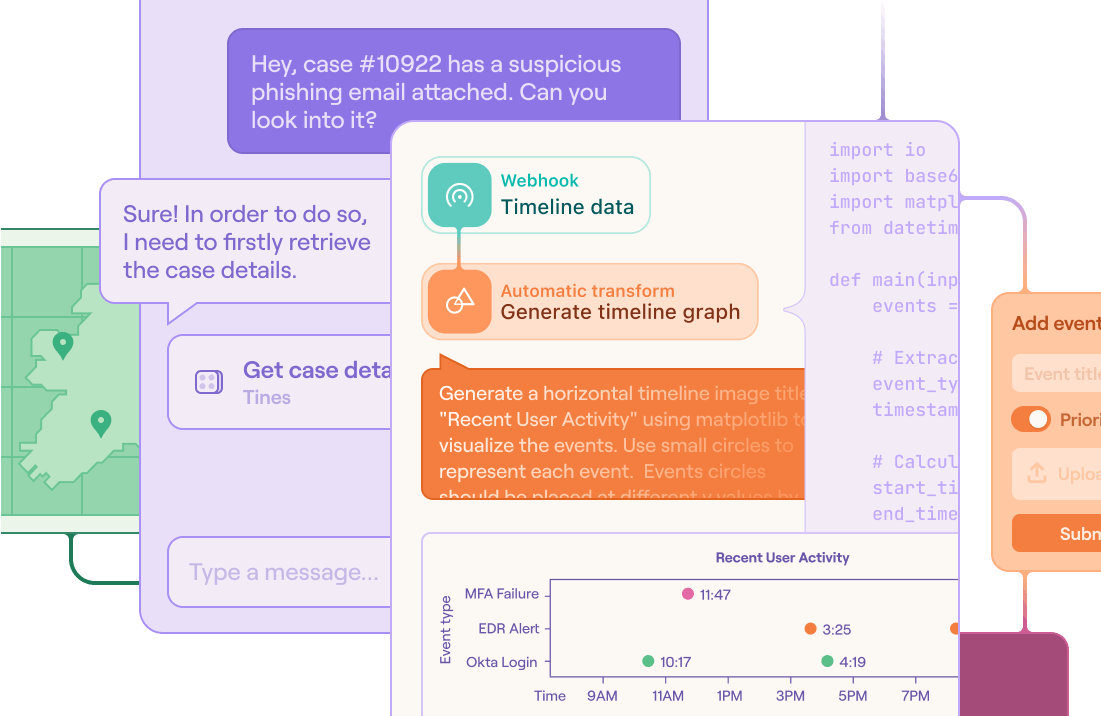
Tines built its reputation on a no-code automation engine that security teams can stand up without a professional services engagement. Stories (Tines’s word for playbooks) chain actions together through a visual canvas, and the platform’s library of pre-built integrations covers the major SaaS and security products SOCs actually use. The platform earns its reputation for rapid time-to-value, with most teams running a working story in production within their first week.
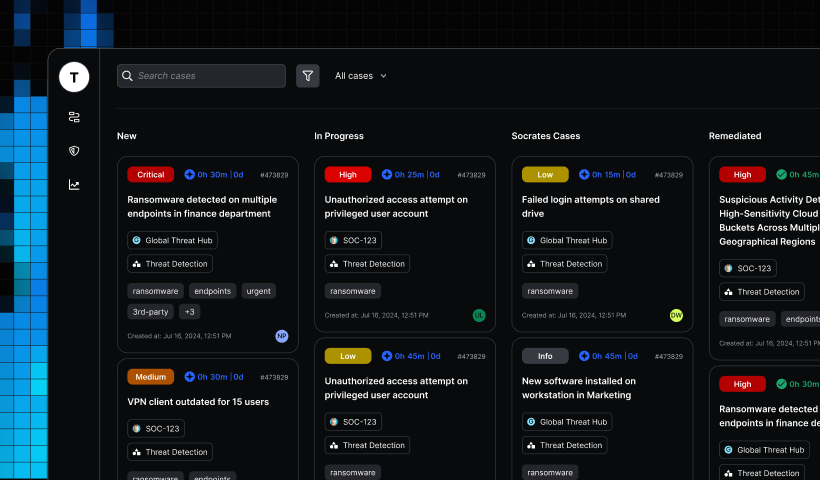
Torq has positioned itself at the leading edge of agentic SOC adoption, with messaging and product moves centered on autonomous agents rather than workflow automation alone. Its Hyperautomation platform combines workflow building with agents that pick up tasks, run them across integrated tools, and report back. Torq has shipped agentic features faster than most competitors in the workflow tier, and the platform’s event-driven architecture supports high alert throughput for fast-moving SOCs.

Palo Alto Networks’ Cortex XSOAR is the enterprise SOAR that other vendors get measured against. It carries the deepest integration catalog in the market, supports playbooks of significant complexity, and ties cleanly into the broader Cortex XDR and threat intelligence ecosystem. Mature deployments demonstrate strong performance at scale, validated in environments running more than 65,000 endpoints.

Formerly Phantom, Splunk SOAR is the playbook layer most Splunk Enterprise Security customers default into. Tight integration with Splunk’s data platform makes it a natural choice for teams already running Splunk as their SIEM, and the platform earns strong reviews for its mature library of community-contributed playbooks and the visual playbook editor that lets analysts automate workflows with minimal scripting.
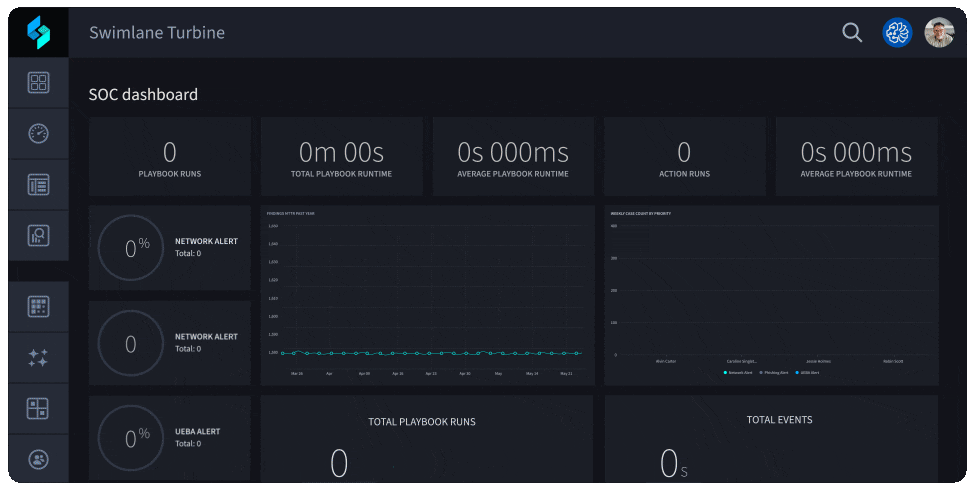
Swimlane positions Turbine as a low-code platform built for high-volume environments where playbook performance matters. It supports both cloud and on-premises deployment and has invested heavily in case management features that consolidate investigation work into a single pane. The platform earns particular recognition in regulated sectors including financial services and federal government, where deployment flexibility and audit-ready reporting matter most.
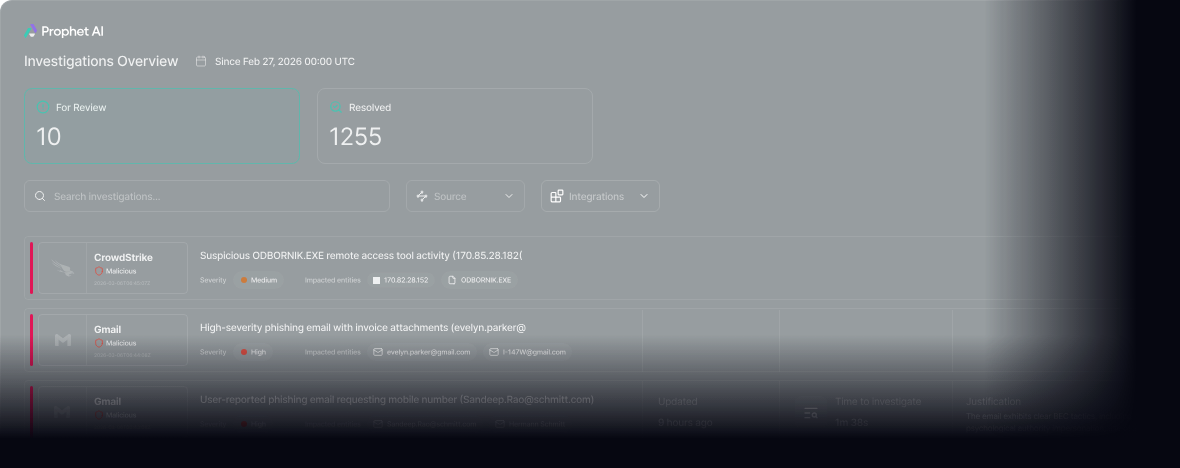
Prophet Security positions itself as the AI SOC analyst, focused on autonomous triage and investigation of the alerts SOCs already receive. Its agents review alert data, gather context from connected tools, and produce investigation summaries that match the format and depth of senior analyst work. Prophet has earned strong reputation in the agentic SOC tier for the quality of its investigation outputs, which read like analyst notes rather than playbook traces.
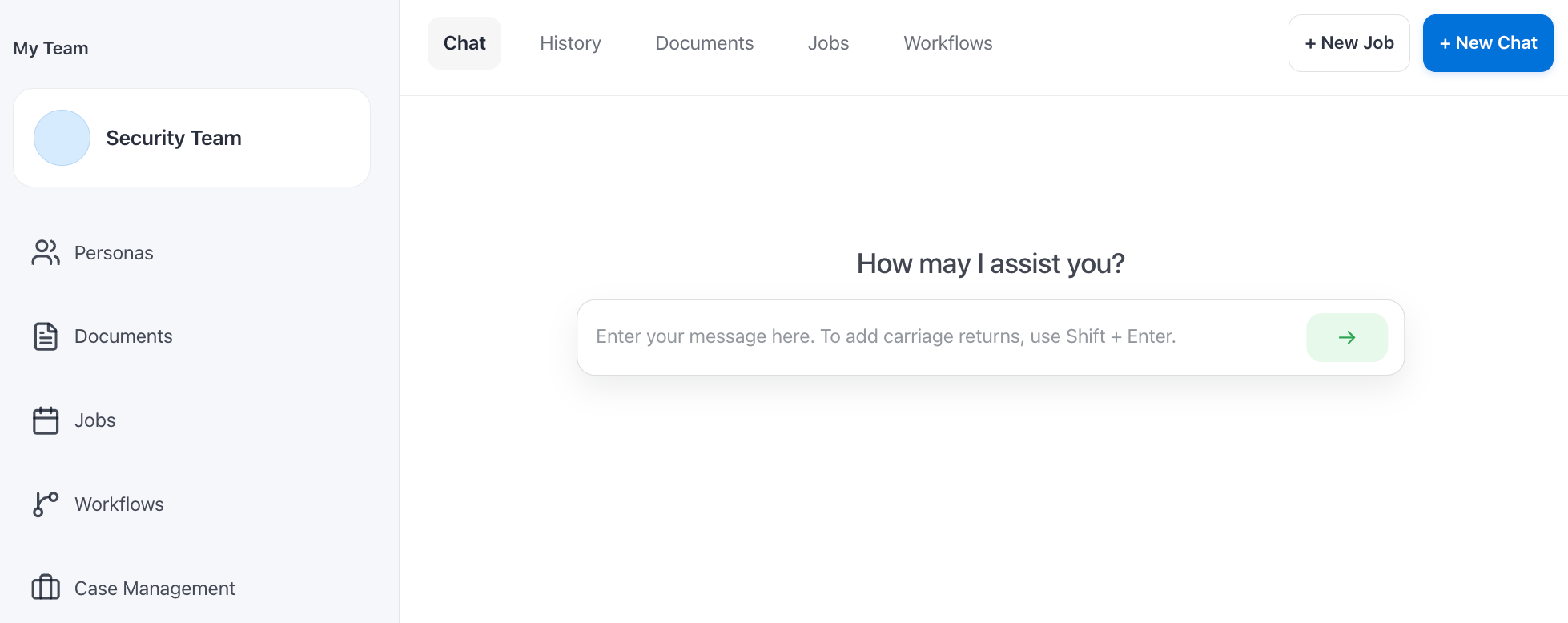
Strike48 takes the agentic model further by owning the data layer the agents reason over. Federated search reaches across S3, Splunk, and Elastic without re-ingestion, the platform reads logs where they already live without forcing migration, and micro-agents scope reasoning narrowly enough to keep hallucination in check. Built on 15 years of Devo’s petabyte-scale log analytics, Strike48 enters the market with enterprise-grade infrastructure already underneath the agentic layer.
Strike48’s micro-agent design draws on a documented agentic AI SOC architecture that combines deterministic workflow logic with cognitive reasoning, keeping agents reliable on routine steps and adaptable on the judgment calls.
The dimensions below are the ones buying committees actually argue about. Feature lists run to hundreds of integrations and converge across vendors. What separates the platforms is the architecture beneath the features.
| Platform | Time-to-value | Agent maturity | Log integration model | Human-in-the-loop posture |
|---|---|---|---|---|
| Tines | Days to weeks | Emerging | Integration-routed (no native log layer) | Analyst-driven; agents assist |
| Torq | Weeks | Aggressive | Integration-routed; agentic features layered on | Agent-driven with analyst review |
| Cortex XSOAR | Quarters | Maturing | Integration-routed; tied to Cortex ecosystem | Playbook-led; analyst oversight |
| Splunk SOAR | Weeks to months | Maturing | Integration-routed via Splunk ES | Playbook-led; analyst oversight |
| Swimlane Turbine | Weeks to months | Maturing | Integration-routed; strong case management | Playbook-led; analyst oversight |
| Prophet Security | Days to weeks | Native | Alert-layer reasoning on existing detections | Agent-driven; analyst approves |
| Strike48 | Days to weeks | Native | Owns log layer; federated search across data stores | Agent-driven; humans approve high-impact actions |
SOAR platform comparison at a glance — assessed on the dimensions that drive buying-committee decisions in 2026.
We will walk you through a live demo against scenarios that match your environment, so you can see how an agentic log foundation changes the math against the SOAR options you are already evaluating.
Traditional SOAR sits on top of whatever data its integrations can reach. That sentence sounds neutral until you trace the implication. The integrations reach SIEMs and EDRs. The SIEMs and EDRs ingested whatever the ingestion budget allowed. The ingestion budget reflected a tradeoff teams made before any alert fired, against threats they could not yet see. Every excluded log source became a cost-driven blind spot, and the playbook layer never had visibility into it.
Agentic platforms invert that order. Complete log visibility comes first. The data foundation reaches logs where they already live through federated search rather than forcing teams to re-ingest into a single store, which makes “log everything” economically viable for the first time. Agents reason over the full picture rather than a sampled subset, and the playbook layer becomes one more action agents can take rather than the only path response can follow.
This is not an incremental upgrade to SOAR. It is a different category of system. The closest historical analog is the shift from log management to SIEM. The new layer does not replace the old layer for everything, but it changes the questions the SOC can ask and the time it takes to get an answer.
Strike48 is built on two architectural decisions that distinguish it from playbook-driven SOAR. Each targets a specific failure mode in the legacy stack, and each is documented in detail on the Strike48 platform page.
Federated search reaches across S3, Splunk, and Elastic without re-ingestion. Teams already running other data layers do not have to migrate to get the agentic experience. The platform reads where the data already lives, which collapses the deployment timeline, removes the political fight that usually accompanies a SIEM replacement, and keeps complete log coverage economically viable without paying to store the same logs twice.
Micro-agent architecture scopes reasoning to narrow, well-defined tasks. Alert triage agents do not investigate. Investigation agents do not respond. Response agents do not communicate with stakeholders. Each agent operates inside a tight context window with a defined output format, which is what keeps the reasoning grounded and the hallucination rate low. The orchestration layer above the micro-agents is where the bigger picture comes together.
The decision is not about preference. It is about what the SOC is trying to accomplish in the next twelve months.
Teams optimizing existing workflows (compressing phishing response, automating user offboarding, standardizing case management) will get faster value from a classic SOAR. The integration depth and playbook libraries are real, and the operational lift to add another well-bounded automation is low.
Teams trying to close visibility gaps the SIEM ingestion model created will not solve that problem with another playbook engine. They need a different data foundation. Agentic platforms (Prophet for alert-layer triage, Strike48 for the data-layer reset) are where that work happens.
The honest answer for many SOCs is both. Run a traditional SOAR where playbooks earn their keep. Run an agentic platform where the playbook-and-pray model has stopped scaling. The architectures are not mutually exclusive, and the teams that buy with that framing get more value out of each.
Walk us through your current detection and response stack, and we will show you which data sources you are missing and where agents would actually change the workload.
A SIEM ingests, parses, and stores security data. A SOAR acts on that data. The SIEM tells you something happened. The SOAR runs the steps that respond to it. Most SOC stacks still run both. Agentic SOC platforms collapse parts of both layers into a single data and reasoning system.
For repetitive automation tasks, SOAR playbooks remain the most reliable option and will not disappear. For investigation, triage, and the work that requires reasoning over context, agents are now outperforming playbook-driven workflows. The category is splitting, not collapsing.
Time-to-value varies by platform. No-code platforms like Tines can have first playbooks live in a week. Enterprise SOAR like Cortex XSOAR often runs into multiple quarters for a mature deployment. Agentic platforms shift the timeline because most of the work happens at the data and reasoning layer rather than in playbook authoring.
Strike48 is not a SOAR tool in the workflow-automation sense. It is an agentic log intelligence platform. The difference shows up in the data foundation (federated search across S3, Splunk, and Elastic rather than forced re-ingestion) and the agent design (micro-agents scoped narrowly to keep reasoning grounded).