IR automation has been pitched as a solved problem for years. Most teams still escalate manually. The reason is structural: the tools they bought solve narrow slices of the incident lifecycle rather than the operational arc of an actual incident. This guide ranks the leading incident response automation tools across four tiers (endpoint IR, forensic and malware analysis, SOAR orchestration, and agentic IR platforms). The agentic tier, where Strike48 and Dropzone AI sit, represents a different architectural premise from SOAR.
Tools were evaluated against the same criteria across four IR market tiers structured against the NIST SP 800-61 incident handling lifecycle: endpoint-focused IR, forensic and malware analysis, SOAR-driven orchestration, and agentic IR platforms. Data sources include G2 and Gartner Peer Insights ratings, practitioner roundup analysis, and category presence in the Gartner SOAR market. Excluded: single-purpose threat intel feeds, legacy on-prem SIEM platforms, and tools without verifiable independent review data.
A note on bias: Strike48 is the publisher of this guide and one of the platforms listed below (Agentic IR Platforms tier, framed as Our Pick). All tools were evaluated against the same criteria. Strengths and watch-outs are sourced from public review data, not self-assessment.
NIST SP 800-61 defines five incident handling stages: preparation, detection and analysis, containment, eradication and recovery, and post-incident activity. Most IR tools cover one or two stages, then hand off to the next point solution.
Every handoff is a seam. Each seam requires custom integration, context stitching, and manual escalation judgment. Teams automate individual actions like containment scripts, enrichment API calls, and ticket creation, but still escalate investigations manually because no single layer holds the full incident picture. Response time degrades at each boundary.
The category is bifurcating. On one side, point solutions that own a stage well. On the other, agentic platforms designed to run the full lifecycle on top of complete data. The tier structure that follows reflects that split.
| Tool | Best for | Rating | Alert correlation | Evidence collection | Audit trail | Human-in-the-loop |
|---|---|---|---|---|---|---|
| CrowdStrike Falcon | Endpoint-native IR | G2 4.7/5 (405) | Endpoint-deep | Host-level | Full | Configurable |
| SentinelOne Singularity | Autonomous endpoint | G2 4.7/5 (201) | Endpoint-deep | Host-level | Full | Configurable |
| Cyber Triage | Endpoint forensics | G2 4.4/5 (17) | None | Deep, host-only | Forensic-grade | Manual |
| VMRay | Malware sandbox | G2 4.6/5 (7) | None | File-level | Analysis-grade | Manual |
| Tines | No-code SOAR | G2 4.7/5 (392+) | Workflow-bound | Orchestrated | Workflow logs | Any step |
| Splunk SOAR | Splunk-ecosystem SOAR | G2 4.4/5 (40) | SIEM-bound | Orchestrated | Case-level | Configurable |
| Cortex XSOAR | Playbook depth | G2 4.6/5 (28) | SIEM-bound | Orchestrated | Case-level | Configurable |
| Strike48 | Agentic IR, full visibility | Launched Jan 2026 | Cross-source, federated | Autonomous, full lifecycle | Verifiable per action | Critical-action gates |
| Dropzone AI | Tier 1 investigation | Gartner 4.8/5 (14) | SIEM-bound | Tier 1 scope | Investigation logs | Out-of-loop by design |
Ratings reflect public review data as of evaluation. Strike48 launched January 2026 and carries no third-party review scores yet.
The two most widely deployed endpoint IR platforms stop threats at the host: containment, rollback, and forensic investigation on the compromised machine. Neither solves the log coverage gap across the broader environment.
CrowdStrike Falcon is a cloud-native endpoint detection platform with automated containment, isolation, and rollback. IR coverage centers on the host: prevention, detection, isolation, forensic investigation. Falcon Intelligence threat intel feeds context into every investigation.
Sourced review (G2, 2026): "The platform is easy to manage overall, and the detection and response capabilities have been reliable for our security operations."
What we like: Endpoint telemetry depth is the deepest in the tier. Gartner Customers' Choice 2026 EPP recognition with 97% willingness to recommend, alongside a G2 4.7/5 (405 reviews), reflects consistent operational reliability rather than a single standout feature.
Watch out for:
SentinelOne Singularity is autonomous endpoint protection and XDR. AI-driven detection and response acts without waiting for analyst confirmation on routine detections. In the MITRE ATT&CK 2024 evaluation, Singularity hit 100% protection detection accuracy and produced 88% fewer alerts than the median vendor.
Where it earns its place: Gartner Magic Quadrant Leader for EPP five consecutive years, G2 4.7/5 (201 reviews), and strong cloud workload and container coverage that extends beyond desktop endpoints.
Sourced review (G2, 2026): "Strong autonomous detection and response capabilities, which help quickly identify and contain threats."
Watch out for:
These tools go deep into what happened on a specific endpoint or inside a specific file. They cover the investigation stage with precision and feed enriched output into broader workflows. They do not run investigations across the environment autonomously.
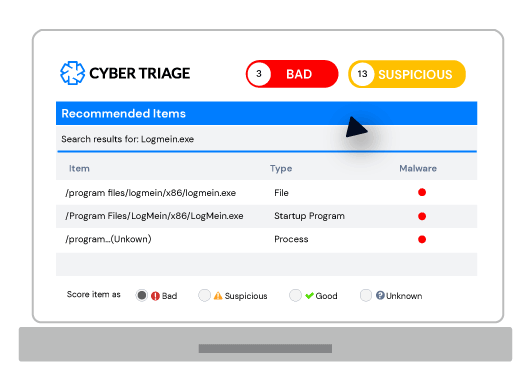
Cyber Triage is an automated DFIR tool for Windows and Linux with agentless remote collection, artifact parsing and scoring, and a median parse time of 11 minutes. The scope is endpoint forensic depth, not cross-environment log correlation, SOAR orchestration, or agentic response. It makes sense for IR teams that need deep, fast endpoint forensics as a dedicated investigation layer inside a broader stack.
G2: 4.4/5 (17 reviews); small review base limits independent validation.
Watch out for: Narrow scope, no cross-source log correlation or agentic response capability, and pricing rated at the highest G2 cost tier for its specialist coverage.
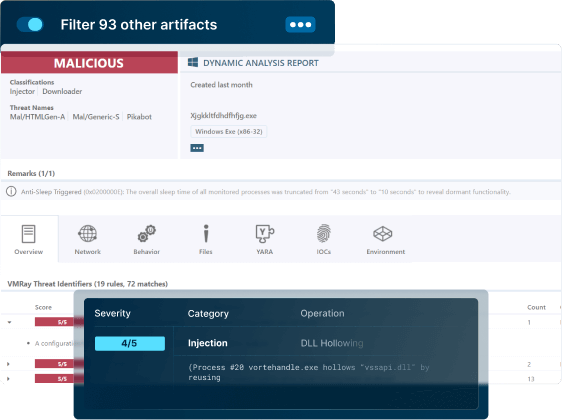
VMRay is a hypervisor-based malware and phishing analysis sandbox, evasion-resistant by design and invisible to agent-based detection evasion. Enriched IOCs feed into SOAR, EDR, and SIEM via API. G2 4.6/5 (7 reviews) is a very small validation base.
Compared to Cyber Triage: both are specialists, but they cover adjacent niches. Cyber Triage goes deep on endpoint forensic artifacts. VMRay goes deep on file and URL analysis. The two can complement each other in a stack.
Watch out for: Specialist enrichment layer rather than a lifecycle platform. Must be integrated into SOAR or orchestration for automated response.
SOAR platforms orchestrate IR workflows across existing tools. They automate what the tools you already have can do. The ceiling on that automation is the quality and completeness of the data those tools can see.

Tines is no-code intelligent workflow automation for IR playbooks. It connects to existing SIEM, EDR, ticketing, and communication tools through APIs, with human-in-the-loop checkpoints configurable at any step. MCP server support extends workflows into AI-connected actions.
Sourced review (Gartner, 2025): "Simple and easy to use, strong API integrations, reliable and scalable, can help reduce manual efforts and build powerful automations for incident management."
What we like: The review signal is the strongest in the SOAR tier. Gartner Peer Insights 4.8/5 (57 ratings) and G2 4.7/5 (392+ reviews), with the highest willingness-to-recommend in the Gartner SOAR market. Broad applicability across security, IT, and business functions makes it a flexible choice for teams already running automation in other functions.
Watch out for:
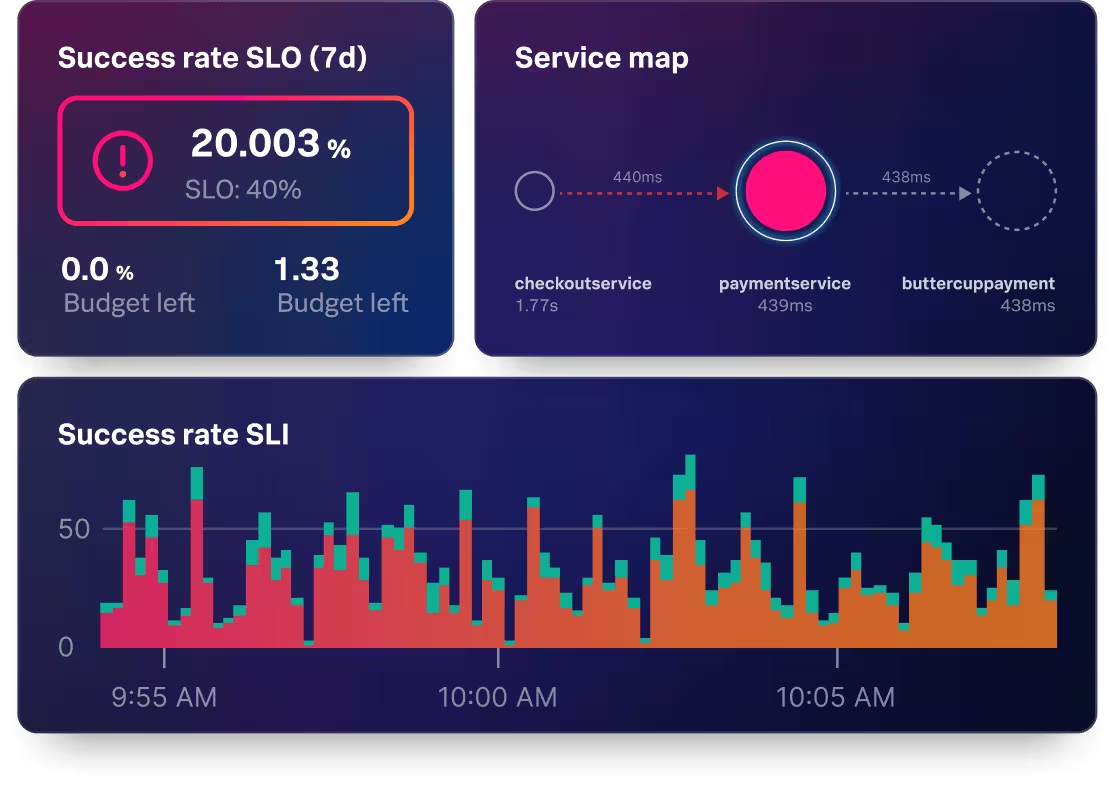
Splunk SOAR is a SOAR layer that integrates tightly with Splunk SIEM to automate alert triage, IR workflows, case management, and threat intel enrichment. 500+ pre-built playbook actions. G2 4.4/5 (40 reviews).
What we like: SoftwareReviews Emotional Footprint score of 8.3 is the highest in the SOAR category. Unified alert-to-case management in one interface with a strong enterprise deployment base.
Watch out for:
Cortex XSOAR is Palo Alto Networks' SOAR platform combining IR automation, case management, real-time collaboration (Virtual War Room), and threat intelligence management. 270+ out-of-box playbooks and 350+ third-party integrations. G2 4.6/5 (28 reviews); Gartner Peer Insights 4.5/5 (69 ratings). A February 2026 Gartner reviewer rating it 5.0: "Mature, reliable, and powerful for automating SOC workflows."
Watch out for:
Who should not use it: Teams outside the Palo Alto ecosystem, where the value of the playbook count narrows significantly.
Agentic platforms run the investigation rather than orchestrating it. Agents that reason over incomplete data produce faster wrong answers. Strike48 addresses log visibility as a prerequisite. Dropzone AI operates over existing SIEM infrastructure.
Our Pick
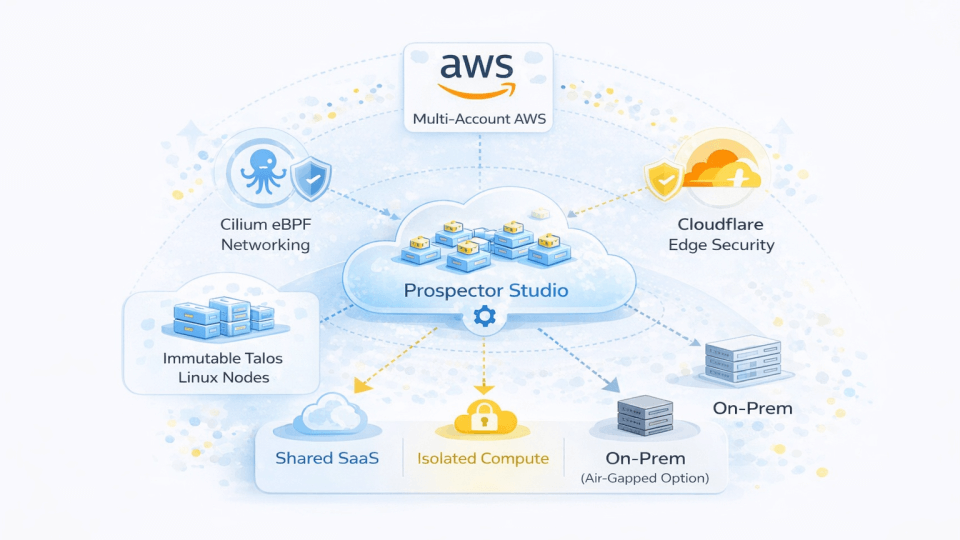
Strike48 is the agentic log intelligence platform purpose-built for security, IT, and compliance operations at petabyte scale. The Strike48 platform deploys pre-built agent packages covering the full IR lifecycle (Alert Assessment, Root Cause Analysis, Forensic Collection, and SOC Management) with search-in-place connectors across S3, Splunk, and Elastic. Strike48 agents fire against every log source, not just the ones a SIEM was configured to ingest.
In early deployments, Strike48 achieved mean time to detection below eight minutes. Strike48 agents uncovered active phishing campaigns that legacy SIEM tools missed and generated and validated new detection rules before real attacks occurred. Per Strike48's 2026 survey of 100 security leaders, 84% say their current tools cannot access all their log data for investigations. Strike48 treats that gap as the first problem to solve, not an inherited constraint.
Watch out for:
Dropzone AI is a pre-trained AI SOC analyst that autonomously handles Tier 1 alert triage and investigation for every alert, replicating elite analyst techniques without humans in the critical investigation path. Gartner 4.8/5 (14 reviews); no G2 reviews listed as of June 2026. The structural ceiling is the completeness of the SIEM data it receives, because blind spots in underlying log coverage produce blind spots in agent output. It makes sense for teams with a mature, well-covered SIEM who want to automate Tier 1 investigation at scale without changing their data infrastructure.
Watch out for: Small Gartner review base (14 reviews) limits independent validation at scale; no public pricing; scope is Tier 1 investigation, not the full IR lifecycle.
Point tools cover stages. SOAR platforms automate workflows. Both are bounded by the completeness of the data the underlying tools can access. Automate workflows over partial data and you get faster wrong answers, not better ones.
A single layer with complete log visibility runs micro-agents that handle triage, investigation, and evidence collection across the full lifecycle, with verifiable audit trails on every action. Strike48 demonstrates this architecture in practice with three components that work together:
Per Strike48's 2026 survey of 100 security leaders, 84% say current tools cannot access all their log data, and 65% have had at least one investigation stall because data was trapped in a system their tools couldn't reach. Every unreachable log source is a potential attack path with no coverage. Every Strike48 agent action carries a verifiable audit trail, which supports compliance and post-incident review requirements. For architectural depth, see Strike48's post on the autonomous SOC.
The right starting point depends on where your current IR stack has gaps and how much of the lifecycle you need a single platform to cover.
| Segment | Recommendation |
|---|---|
| SMB | Tines for lowest barrier, flexible no-code workflow automation, free community tier |
| Mid-market | CrowdStrike Falcon or SentinelOne Singularity for endpoint-first teams with existing SIEM; Strike48 if log coverage gaps are the primary limitation |
| Enterprise | Strike48 for full-lifecycle agentic IR with federated log visibility; Cortex XSOAR or Splunk SOAR for large Palo Alto or Splunk ecosystems |
If you know your primary constraint, use it to filter the list.
| Priority | Recommendation |
|---|---|
| Lowest cost to start | Cyber Triage for endpoint forensics; Tines for free community tier workflow automation |
| Broadest IR lifecycle coverage | Strike48 (triage through evidence collection in one platform); Cortex XSOAR (270+ playbooks) |
| Fastest deployment | Strike48 shared SaaS (minutes to go-live); Tines (no-code, no engineering required) |
If the tools above cover your automation gaps, start there. If you've run AI pilots and found the output bounded by what your SIEM can see, that is a data coverage problem, not a model problem. For teams working through the architecture decision, Strike48's posts on AI-enabled incident triage and SOC automation are further reading.
See how Strike48 gives agents the visibility to run investigations your current stack can't.
What is the difference between a SOAR platform and an agentic IR platform? SOAR automates defined playbooks across existing tools, and its ceiling is the data those tools can access. An agentic platform like Strike48 runs autonomous investigations across a complete log visibility layer, handling triage, correlation, and evidence collection rather than just orchestrating the tools that perform them.
Do incident response automation tools replace human analysts? No, and the best architectures are explicit about where humans stay in the loop. Strike48 keeps human approval gates on critical actions like endpoint isolation and remediation. Agents handle investigation and triage; analysts handle decisions with real-world consequences.
How does log coverage affect IR automation quality? Forensic completeness depends on it. When agents reason over partial data, the post-incident audit trail inherits those gaps, and blast radius analysis cannot reconstruct what happened in the unreachable sources. The investigation closes, but the evidence record is incomplete in the places that matter most for regulatory review and root cause certainty. Log coverage is the prerequisite, not an afterthought.