
The question security teams are actually asking is which platform delivers on the multi-agent SOC promise without inheriting the blind spots that derailed the last generation of AI security tools. 7AI is one option in a fast-moving field. So are Dropzone AI, Prophet Security, Exaforce, Intezer, ReliaQuest GreyMatter, Radiant Security, and Strike48.
The differences are not marketing positioning. They are structural decisions about agent design, log coverage, human-in-the-loop posture, and audit trail depth. Those decisions determine whether a platform compresses tier-one work in production or recreates the same problems under a new vendor name. The buying stakes are real. Our 2026 State of Agentic Security report found that 84% of security leaders agree AI agents should be handling Level 1 SOC work, but only 22% are ready to fully automate it. That 62-point gap is the gap each platform in this lineup is trying to close, and the architecture is what determines whether the team trusts it enough to let it close.
Strike48 will show you how federated search and micro-agent architecture handle the log coverage and audit trail questions other vendors leave to the integration team.
7AI is one of several multi-agent SOC platforms competing for the same buyer. The direct alternatives are Dropzone AI, Prophet Security, Exaforce, Intezer, ReliaQuest GreyMatter, Radiant Security, and Strike48. Each one promises autonomous tier-one triage. The architectural choices behind that promise are where the platforms diverge.
Outside this group, security teams sometimes evaluate XDR platforms with agentic add-ons (CrowdStrike Charlotte AI, Microsoft Security Copilot, Palo Alto Networks Cortex XSIAM). Those tools sit on the vendor's own telemetry. They are not drop-in alternatives to 7AI for teams running a heterogeneous log stack and looking for SIEM-agnostic agentic coverage.
Before comparing logos, the buyer needs a rubric. The autonomous SOC category has converged on similar promises. The structural differences are what determine whether the platform reduces SOC workload or generates a new layer of confident-sounding noise.
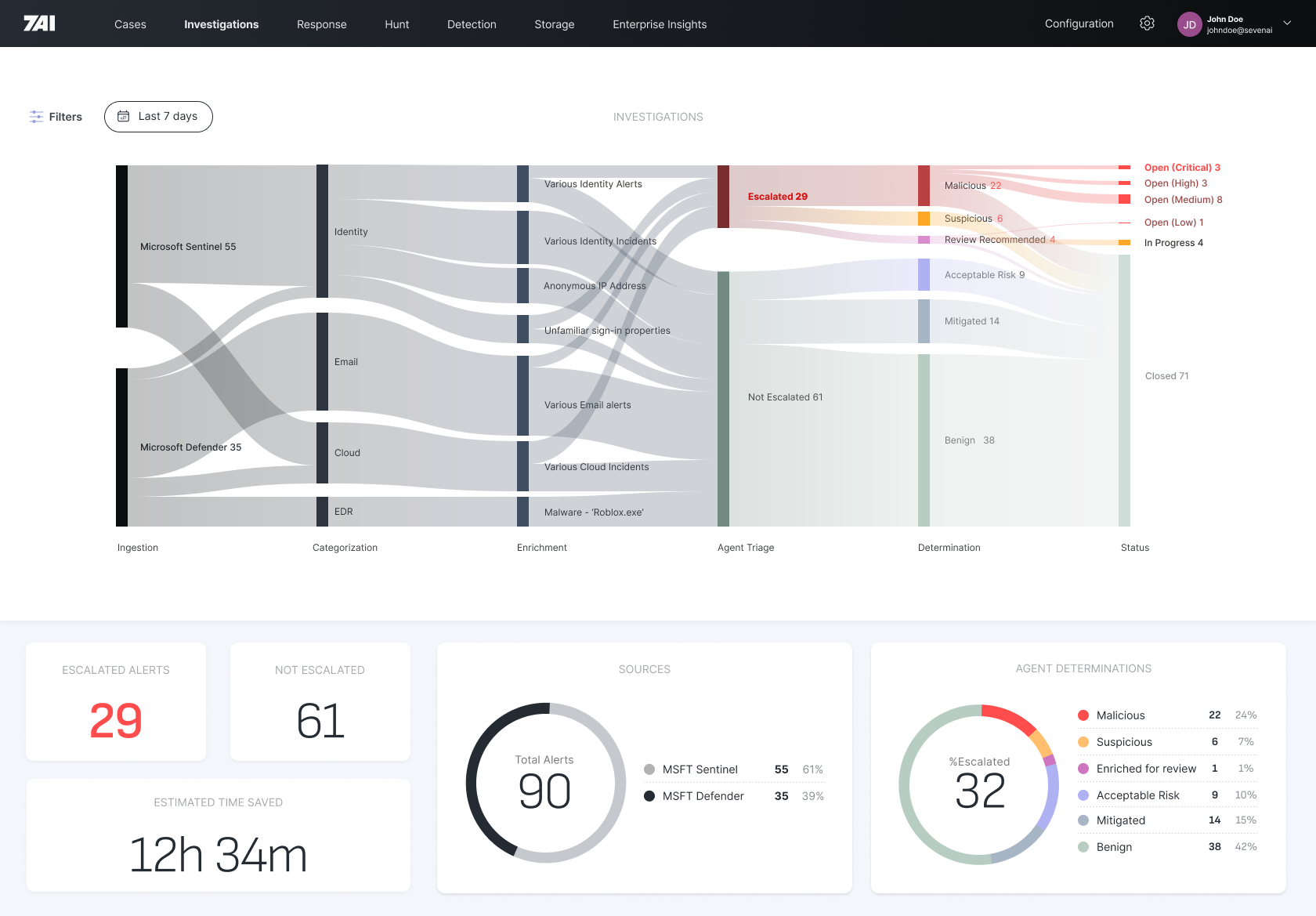
Multi-agent SOC platform focused on tier-one alert triage. 7AI shipped from the team that built Cybereason, and the platform reflects that lineage. Specialized AI agents swarm an alert, categorize it, dispatch the right investigation agent, and produce a verdict ready for analyst review. In deployment, 7AI sits over your existing security stack. No log ingestion, no rip-and-replace; the agents query EDR, SIEM, and email security tools via API. The tradeoff is that 7AI inherits the visibility your existing stack already has. If your SIEM ingests 60% of your environment for cost reasons, the agents reason over 60%. 7AI also offers a PLAID engagement model (People-Led, AI-Driven) with white-glove customization from their Boston team, which compresses configuration for teams without dedicated AI engineering.
What you need to know
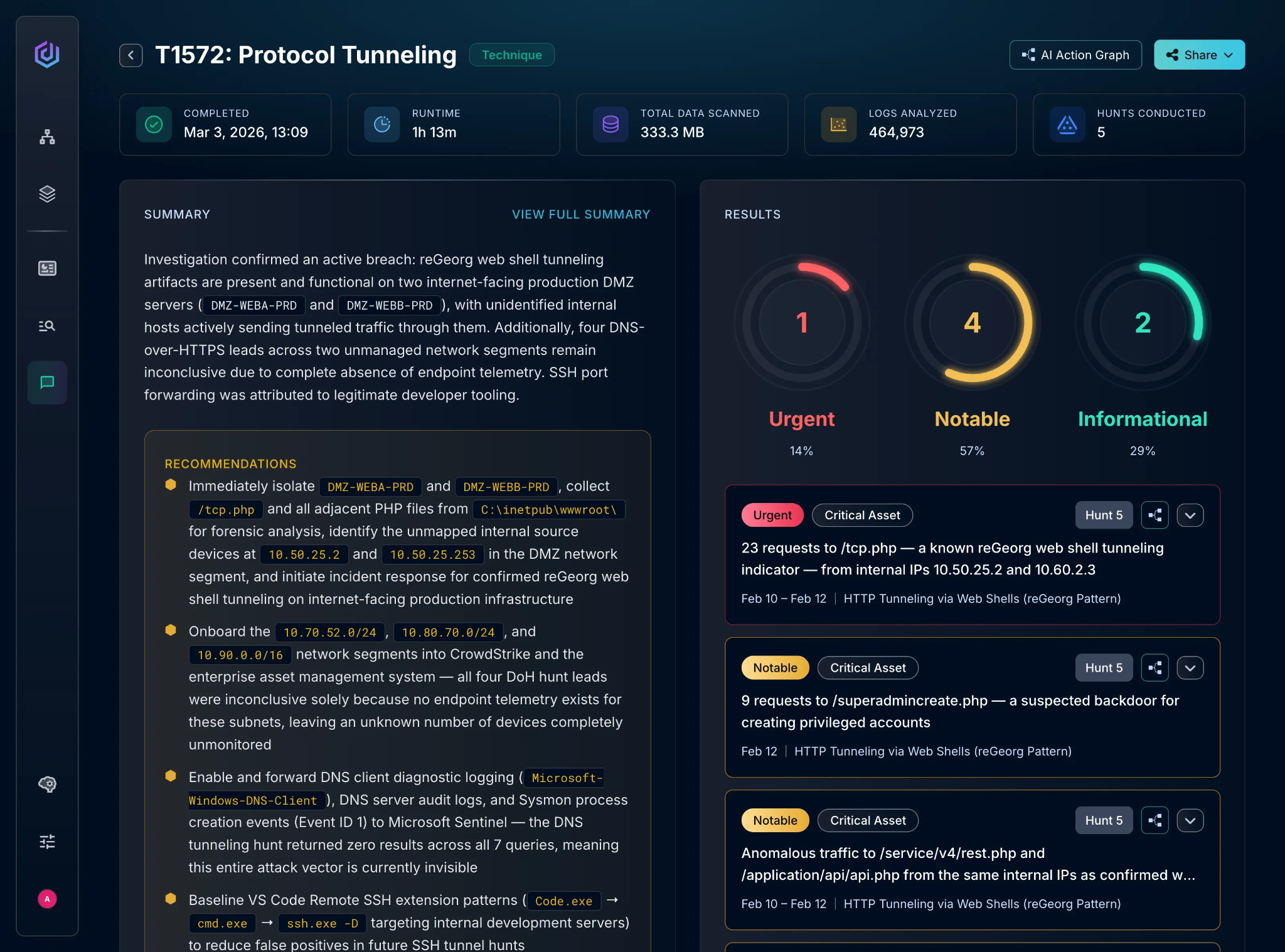
Pre-trained AI SOC analyst for autonomous alert investigation. Dropzone is the longest-tenured AI analyst platform in this lineup, founded by Edward Wu out of ExtraHop's detection engineering team. The product is a single pre-trained analyst persona that connects to your security tools via API and starts investigating alerts the day you provision keys. No playbooks, no training period. You give it scope, which alerts to investigate, which tools it can touch, which actions it can take, and it works. Onboarding it feels more like onboarding an analyst than configuring a platform. Dropzone learns through context memory that gets richer as your team gives feedback on investigations. The architecture is closer to monolithic than micro-agent, so investigation depth is bounded by the alert types Dropzone has trained on. Strongest fit for teams with a high-volume queue (phishing, EDR, identity) that want relief in days, not quarters.
What you need to know
Autonomous AI analyst with end-to-end alert investigation. Prophet positions as a full agentic AI SOC platform rather than just a triage agent. Alert investigation, response, threat hunting, and detection tuning all sit in one product. The distinguishing operational behavior is that Prophet shows its work: every investigation produces an explicit reasoning chain an analyst can audit step by step. Setup is similar to Dropzone, read-only access to your security tools, about 30 minutes, and the agent starts investigating. Prophet learns from analyst feedback during onboarding and continuously after, so accuracy improves with use rather than degrading as the environment changes. The data layer assumption is the same as most overlay platforms: Prophet works with what your existing tools surface, not with logs your SIEM doesn't see.
What you need to know
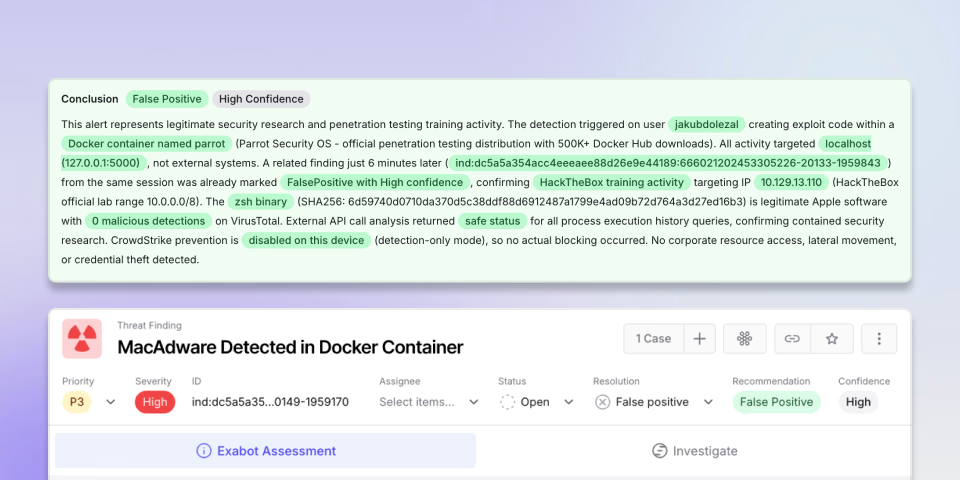
Multi-agent SOC with an integrated data layer. Exaforce takes the most aggressive architectural bet in this lineup. Instead of layering AI agents on your existing stack, it builds a security data lake and runs the agents (Exabots) over the consolidated telemetry. The intelligence layer is what Exaforce calls a Multi-Model AI engine: semantic reasoning, behavioral baselining, and LLMs combined rather than LLM-only. In practice, Exaforce wants to be the new data layer for your detection and triage work. That comes with real upside (full visibility across cloud, identity, SaaS, and endpoint in one place; auto-correlated investigations) and real cost (migration project, parallel running with your existing SIEM during cutover). The platform is strongest in cloud-native environments like AWS, Okta, GitHub, OpenAI, and Google Workspace, where the multi-model engine has clear advantages over rule-based detection.
What you need to know

Autonomous SOC platform with malware analysis heritage. Intezer is the platform in this lineup with the longest company history but the shortest tenure as an autonomous SOC platform. The company started in malware analysis (genetic analysis of code, sandboxing, memory forensics) and pivoted into autonomous SOC by wrapping those analysis engines in an AI-driven triage layer. That heritage shows up where it matters. Intezer's strongest results are on phishing, EDR, and endpoint alerts where its underlying analysis engines have a head start over generalist LLM-only platforms. On average, Intezer reports that only about 4% of alerts require human review. The rest auto-resolve as false positives or surface with conclusive verdicts and evidence packages. The platform also bundles analyst tools (file scanning, URL scanning, sandboxing) inside the same product, so it doubles as an incident response toolkit alongside the autonomous triage layer.
What you need to know
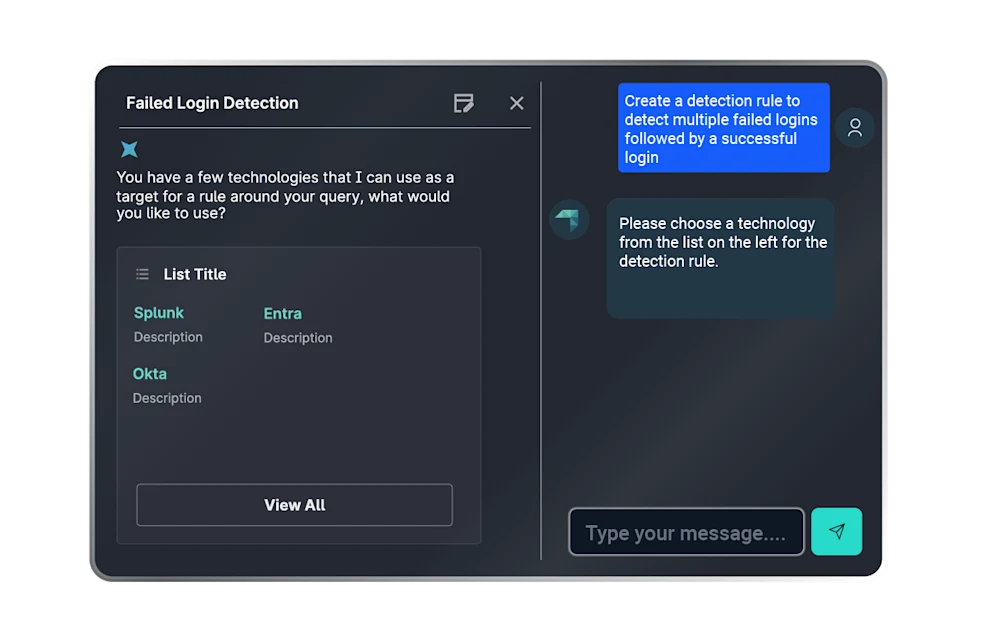
Established XDR/SecOps platform with agentic capabilities layered in. GreyMatter is the most operationally mature platform in this lineup, with ReliaQuest's fifteen-plus years of running global enterprise security operations underneath it. The agentic capabilities are organized as Agentic Teammates: six personas built on 200+ agent skills and 400+ AI tools that handle different SOC roles, including detection engineering, threat hunting, triage, and response. Working with GreyMatter feels less like deploying a software product and more like onboarding a co-managed service. ReliaQuest's professional services and SOC operations team are tightly integrated with the platform, and most customers consume GreyMatter as part of a co-managed engagement rather than as a pure-software product. That's its strength (proven scale, operational expertise built in) and its constraint: you commit to ReliaQuest's data conventions and the co-managed delivery model.
What you need to know
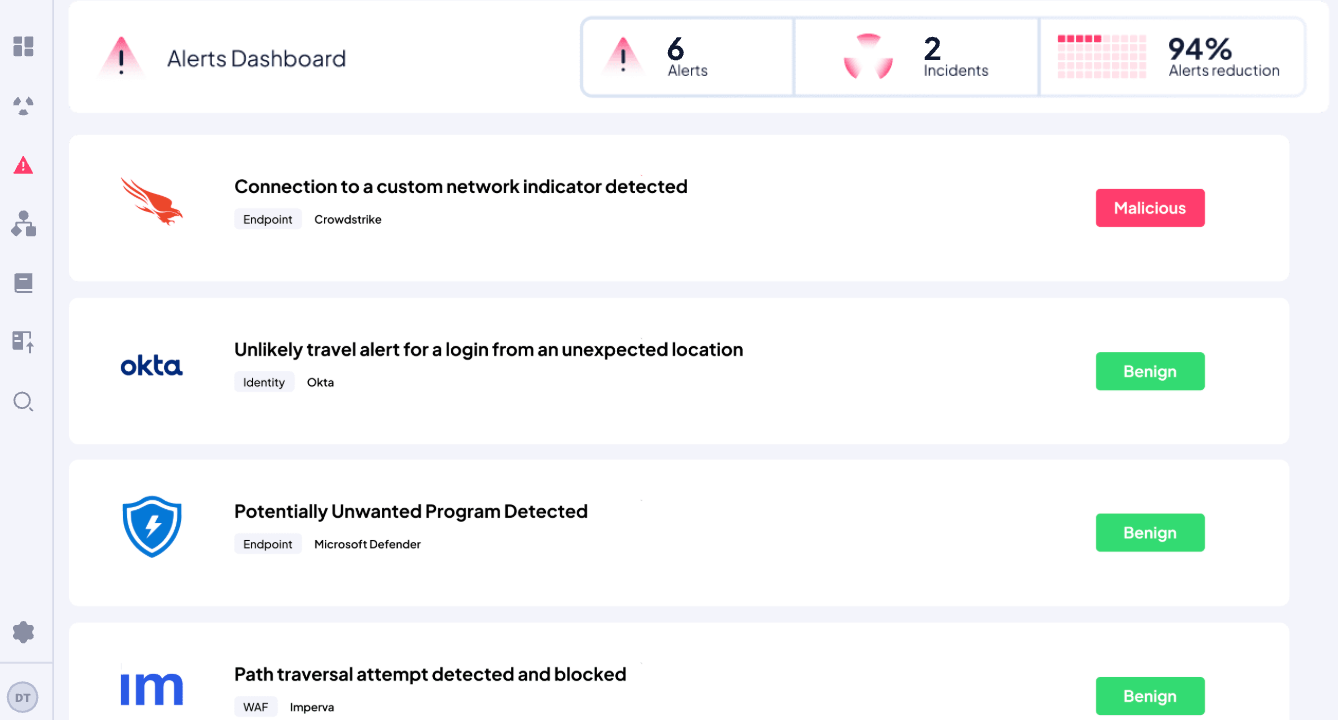
Adaptive AI SOC analyst with autonomous triage and remediation. Radiant is built around an unbounded coverage claim: 100% of alert types across email, endpoint, identity, network, cloud, insider threat, SIEM, WAF, DLP, OT/IoT, dark web, and supply chain. Where most AI SOC analysts pre-train on six to eight alert categories, Radiant dynamically builds investigation logic per alert without pre-configured playbooks. That design choice matters in production. It means Radiant handles complex multi-signal alerts (an unusual login chained to a privilege escalation chained to an OAuth grant) that simpler platforms drop or escalate as too complex. The platform deploys via 100+ API integrations, runs autonomous investigation, escalates verified threats with full response plans attached, and supports one-click remediation. It also bundles a security data lake for log management, so analysts get the full context behind escalations without paying separately for log ingestion.
What you need to know
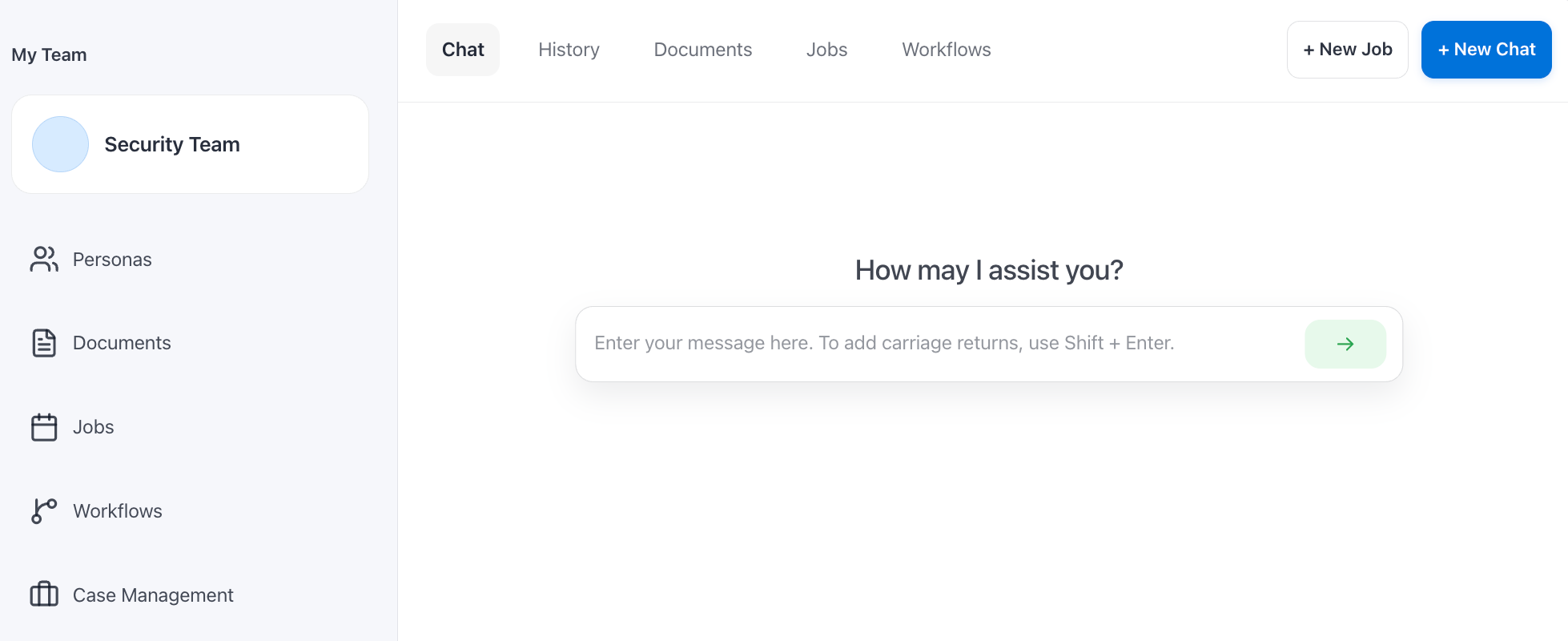
Agentic log intelligence with federated search and micro-agent architecture. Strike48 launched in January 2026 as the product brand of Devo Technology, which means it ships with fifteen-plus years of petabyte-scale log infrastructure underneath rather than an MVP built from scratch. The architectural bet that distinguishes it from the rest of this lineup is unifying the data foundation and the agent layer in one platform. Federated search reasons over logs in S3, Splunk, and Elastic where they already live, so the cost-driven blind spots that fragment SIEM coverage stop being blind spots. The agents see everything, not just what your team could afford to ingest. The agent layer uses small, narrowly scoped micro-agents (Alert Assessment, Root Cause Analysis, Forensic Collection, SOC Management) that hand work to each other through a hybrid workflow architecture combining deterministic steps for consistency with cognitive steps for reasoning. GraphRAG persona graphs constrain hallucination, MCP-controlled tool access governs what each agent can touch, and Prospector Studio is the no-code interface for extending pre-built agents or building new ones for compliance, fraud detection, or any other log-driven workflow.
What you need to know
Eight autonomous SOC platforms scored on the four architectural dimensions that determine whether a deployment scales past the demo.
| Platform | Agent design | Log coverage | HITL posture | Audit trail |
|---|---|---|---|---|
| 7AI | Multi-agent | Existing tools (no ingestion) | Recommendations with approval gates | Investigation log per alert |
| Dropzone AI | Single agent (playbook-driven) | Existing tools | Verdict and recommendations | Reasoning chain per investigation |
| Prophet Security | Single agent (autonomous chain) | Existing tools | Verdict and recommendations | Reasoning chain per investigation |
| Exaforce | Multi-agent | Ingestion to integrated data lake | Recommendations with approval gates | Centralized in data lake |
| Intezer | Single agent (analysis-driven) | Existing tools | Verdict and evidence package | Evidence package per alert |
| ReliaQuest GreyMatter | Agentic layer over XDR | Ingestion to GreyMatter | Co-managed with vendor analysts | Platform-native |
| Radiant Security | Single agent (adaptive) | Existing tools | Triage and execute with approval | Action log per alert |
| Strike48 | Micro-agent with GraphRAG | Federated search (S3, Splunk, Elastic) | Configurable, MCP-governed | Per-agent, per-action audit trail |
Scroll horizontally on smaller screens to view all columns.
We will sit with your team and run a working session in your real environment.
Different teams will land on different platforms because the rubric weights different priorities. The right answer is the architecture that fits your operational reality, not the platform with the most polished demo.
Most autonomous SOC POCs produce the same outcome. The vendor's chosen alert types triage well. The team signs. Six months in, the platform plateaus on alerts outside the demo scope. The cause is almost always architectural, and a scored POC catches it before the procurement decision.
The autonomous SOC category will consolidate over the next twenty-four months. The platforms that survive will be the ones that solved the data architecture question alongside the agent question. Teams that pick on the strength of the agent layer alone will be evaluating again in eighteen months. The architectural debate playing out across this lineup is the one Strike48 frames as Agentic Log Intelligence, and it is worth understanding the category definition before choosing a vendor inside it.
See how federated search and micro-agent architecture change the daily reality of investigations.
7AI's main competitors are autonomous SOC platforms targeting the same buyer: Dropzone AI, Prophet Security, Exaforce, Intezer, ReliaQuest GreyMatter, Radiant Security, and Strike48. Each platform promises autonomous tier-one triage. The structural differences live in agent design, log coverage model, human-in-the-loop posture, and audit trail maturity.
7AI focuses on multi-agent triage layered over the existing security stack. Strike48 unifies the data foundation and the agent layer in a single platform, using federated search across S3, Splunk, and Elastic to reason over complete logs and a micro-agent architecture with GraphRAG persona graphs to constrain hallucination. Where 7AI assumes the existing data stack is good enough, Strike48 treats the log coverage problem as the architectural prerequisite for autonomous triage.
Four criteria matter more than feature lists. Agent design (monolithic vs. micro-agent) determines hallucination control and audit trail quality. Log coverage model (ingestion vs. federated search) determines whether the platform sees the data your team already excluded for cost. Human-in-the-loop posture determines deployment risk. Audit trail maturity determines whether post-incident review and compliance audits are defensible.
Not directly. XDR platforms with agentic add-ons (CrowdStrike Charlotte AI, Microsoft Security Copilot, Palo Alto Networks Cortex XSIAM) operate on the vendor's own telemetry. They are not SIEM-agnostic and do not replace 7AI for teams running heterogeneous log stacks. For teams already committed to one of those XDR vendors, the agentic add-on is the path of least resistance. For teams that want SIEM-independent agentic coverage, the lineup above is the actual comparison set.